Modular ADU / Backyard Home — Prices, Sizes and Delivery
6 configurations priced new, used and monthly. Delivered and set nationwide in a 30 to 90 day production window.
Modular ADU / Backyard Home — price matrix
New, used and monthly rental across every configuration we build. Researched market estimates, July 2026.
| 385 sqft studionew · used · monthly | $232,000— used · — |
| 500 sqft 1 bed / 1 bathnew · used · monthly | $253,000— used · — |
| 625 sqft 2 bed / 1 bathnew · used · monthly | $278,000— used · — |
| 800 sqft 2 bed / 2 bathnew · used · monthly | $312,000— used · — |
| 1,070 sqft 3 bed / 2 bathnew · used · monthly | $352,000— used · — |
| 1,195 sqft 3 bed / 3 bathnew · used · monthly | $374,000— used · — |
Estimates for budgeting. Final pricing depends on configuration, finish level, site conditions and freight distance.
Modular ADU / Backyard Home — what you are buying
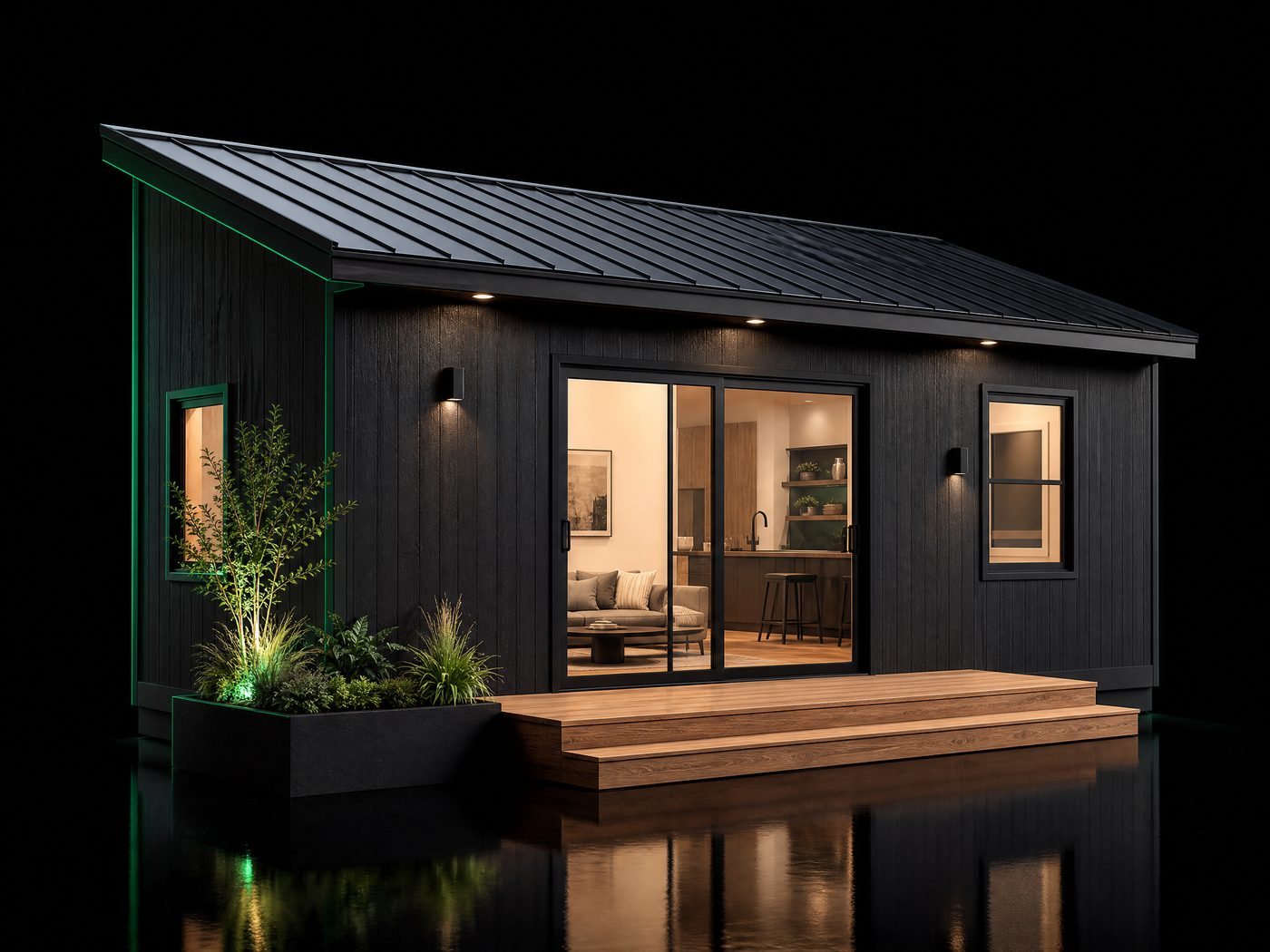
The modular adu / backyard home is one of the most requested configurations we quote, and it is also one of the most inconsistently priced across the industry. Suppliers publish a per-square-foot figure, leave out foundation, freight, crane and permitting, and the number a buyer eventually pays lands well above what they planned around. We publish the unit price and the site costs separately so the comparison is honest.
| Typical cost per square foot (new) | $325 |
| Premium specification per square foot | $395 |
| Configurations priced | 6 |
| Price range (new) | $232,000 – $374,000 |
| Production window | 30–90 days, queue dependent |
| On-site set | 2–8 hours typical per unit |
| Delivery | All 50 states · $7 per loaded mile |
New versus used versus rental
New units carry full warranty, current code compliance and the finish level you specify. Used and refurbished inventory typically runs forty to sixty percent below new, with the trade-off being available configurations rather than condition — a refurbished unit is stripped, inspected, repaired and re-finished, but you take the floor plan that exists. Rental makes sense under roughly eighteen months of use; past that point, cumulative rent generally exceeds purchase price and you own nothing at the end. Run the arithmetic on your actual duration before defaulting to rental because the monthly number feels smaller.
What actually drives the price
Size is the obvious variable, but it is rarely the one that moves a quote the most. Finish level, mechanical capacity, code requirements in your jurisdiction, and site conditions all shift the total more than a few extra square feet. A unit destined for a high-wind coastal county needs impact-rated openings and engineered tie-downs. A unit for a site with no municipal sewer needs a septic system. Neither of those is visible in a per-square-foot figure, which is exactly why we break them out.
Lead time and why it is a range
We quote 30 to 90 days as a production window rather than a delivery date, and the reason is supply and demand. Factory queue depth changes weekly. Material lead times on steel, windows and finish goods have tightened this year and seasonal demand compresses the calendar heading into spring. A slot confirmed today holds at the window we quote. A slot considered for six weeks usually reprices, because the block it was going into has filled.
Every configuration priced
385 sqft studio
At 385 sqft studio, expect roughly $232,000 new. Buyers often size up from here once they see the marginal cost per additional square foot.
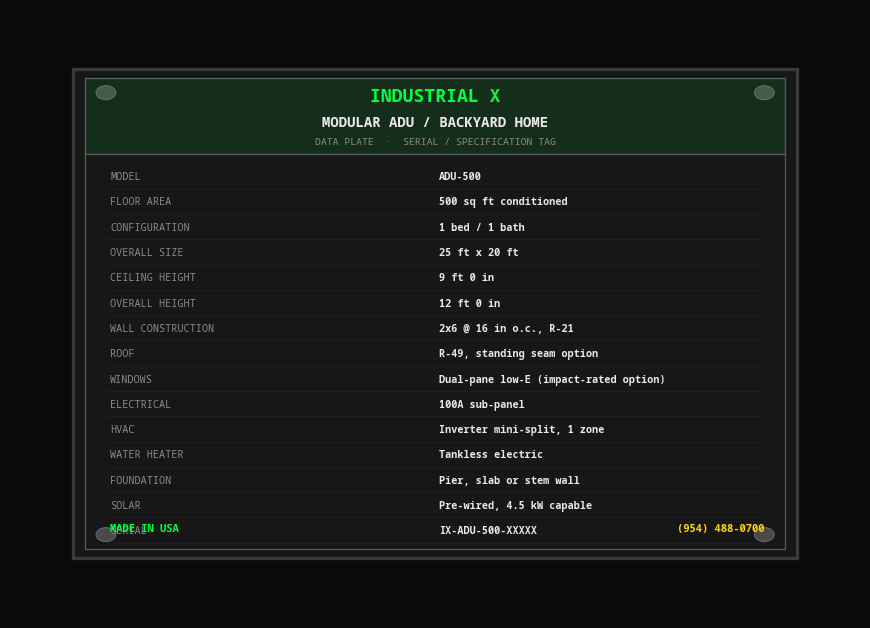
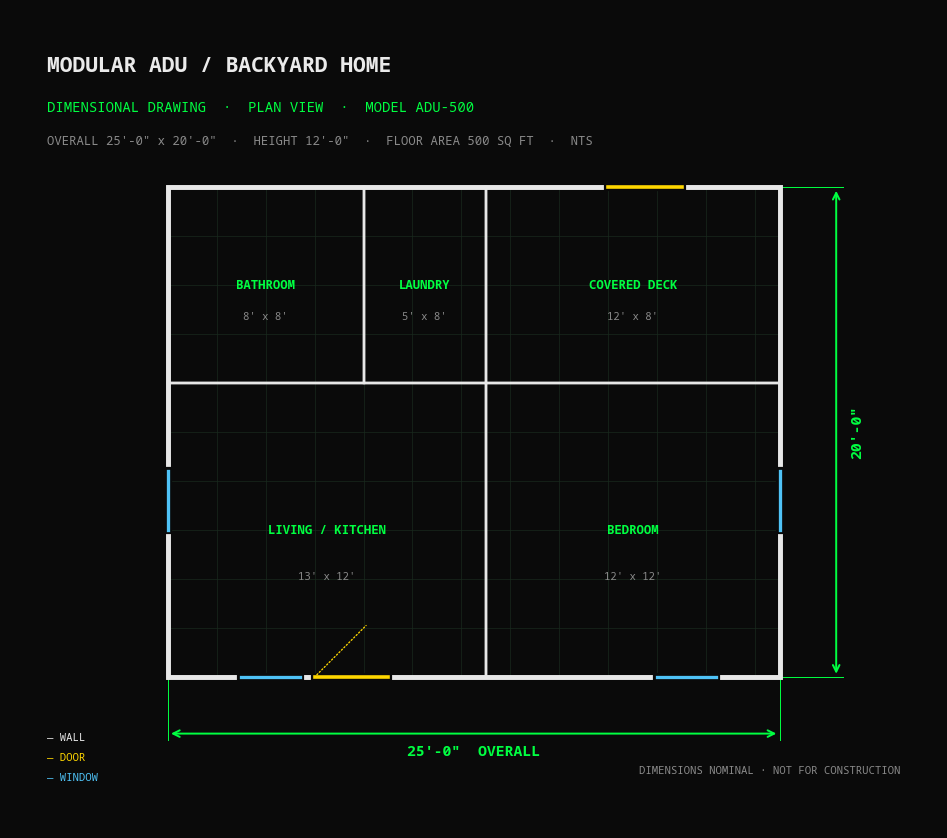
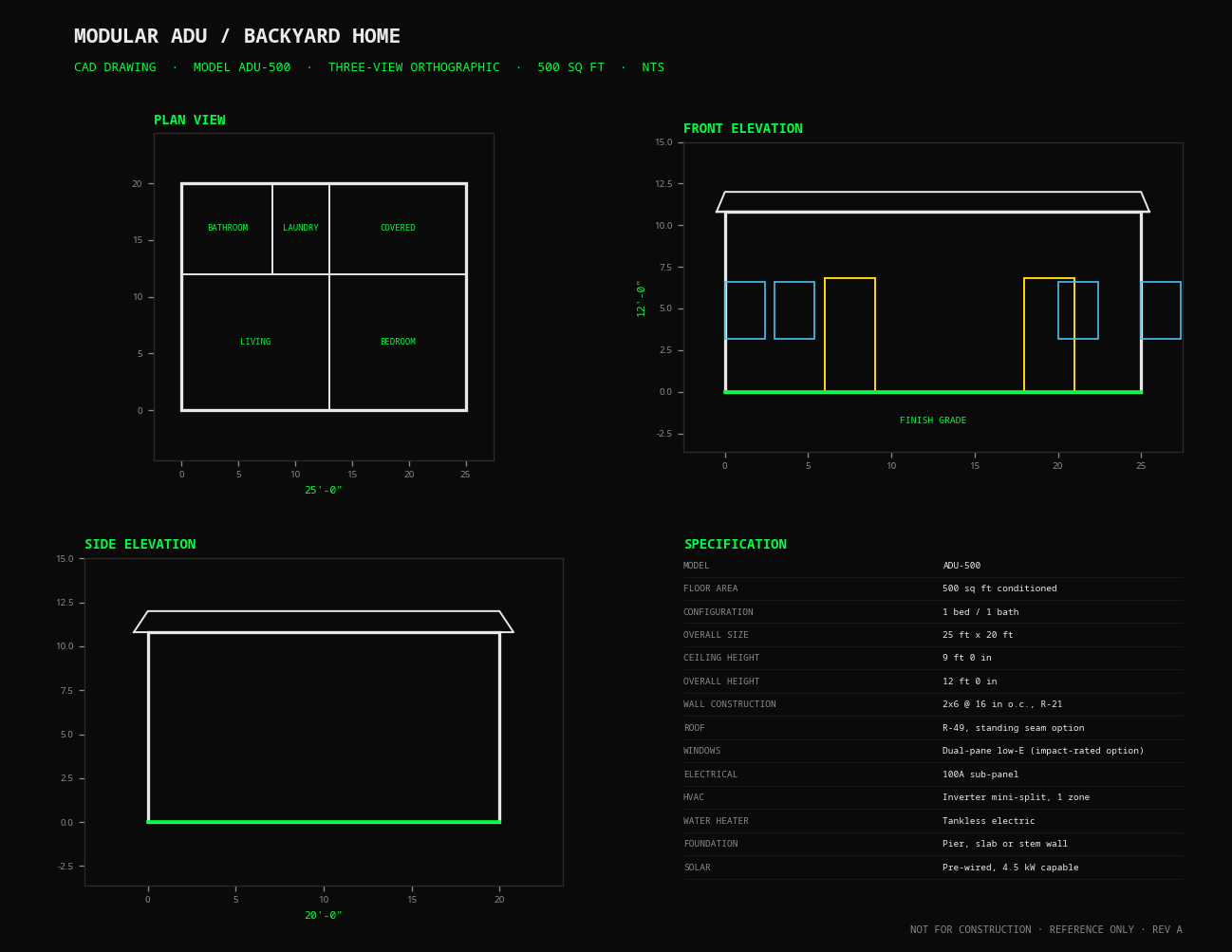
500 sqft 1 bed / 1 bath
At 500 sqft 1 bed / 1 bath, expect roughly $253,000 new. This size typically clears standard highway transport without special permitting, which keeps freight predictable.
625 sqft 2 bed / 1 bath
At 625 sqft 2 bed / 1 bath, expect roughly $278,000 new. Buyers often size up from here once they see the marginal cost per additional square foot.
800 sqft 2 bed / 2 bath
At 800 sqft 2 bed / 2 bath, expect roughly $312,000 new. Buyers often size up from here once they see the marginal cost per additional square foot.
1,070 sqft 3 bed / 2 bath
At 1,070 sqft 3 bed / 2 bath, expect roughly $352,000 new. Buyers often size up from here once they see the marginal cost per additional square foot.
1,195 sqft 3 bed / 3 bath
At 1,195 sqft 3 bed / 3 bath, expect roughly $374,000 new. This is one of the more common configurations we ship and inventory moves quickly on it.
Why buy from us
Engineering that survives transport
A module has to be structurally sound enough to be lifted by crane, hauled at highway speed, and set without racking. That requirement forces heavier framing, more fasteners and engineered connections than code minimum for a comparable site-built structure. The transport requirement quietly produces a stronger building — which is exactly why factory-built performs well under high wind loads.
Cost certainty instead of change orders
The reason site-built budgets drift is that the price is discovered as the work proceeds. Factory pricing is set when the design is locked, because the production cost of a known module is known. The variable that remains is site work — foundation, utilities, access — which is why we quote that separately and in the open instead of burying it.
Quality you can actually compare
Every unit off a line is built to the same specification with the same crews and the same materials. That repeatability is impossible to achieve across independent site-built projects with rotating subs. If you inspect one finished unit, you have meaningfully inspected the one you are buying.
Factory conditions beat weather
A module built indoors never sits in the rain waiting on a framing crew. Lumber does not swell, drywall does not wick moisture, and the schedule does not slip because a storm parked over the site for nine days. That single difference — controlled environment versus open air — is most of why factory-built assemblies test tighter on a blower door than comparable site-built work.
Modular ADU / Backyard Home questions
How much does a modular adu / backyard home cost?
Do you have used modular adu / backyard home inventory?
How long until delivery?
What does delivery and installation cost?
Can it be relocated later?
Do you sell nationwide?
Get a Modular ADU / Backyard Home quote
Tell us the scope and the ZIP. You get a real delivered-and-installed number, not a "contact us for pricing" runaround.
Related products
More from the network
We run a group of focused sites so you land on the one that matches what you actually need instead of a catch-all catalog.